
Building a Mead Business Part 1
The Rabbit Hole
Passion, inspiration, the love of honey and alcohol, and an endless supply of ideas and techniques being thrown around the internet. My mind was alight with possibility.
Like most hobbies, it started small.
A few videos, a bit of reading, and a simple thought:
"How hard can it be?"
The answer, as it turns out, is both easier and harder than you'd expect.
Making mead at its most basic level is simple. Honey, water, yeast, and time. Four ingredients and a little patience.
Making good mead, however, is a completely different story.
My first batches were only 5 litres. Small enough that if things went wrong, it wasn't a disaster. Looking back now, I laugh at how much I thought I knew after reading a few articles and watching a handful of brewers online.
Every batch taught me something.
Sometimes that lesson was about yeast nutrition.
Sometimes it was about temperature control.
Sometimes it was simply that cleaning up a fermenter explosion at midnight isn't nearly as fun as brewing the batch in the first place.
But every success fuelled the next experiment.
Different honey varieties.
Different fruits.
Different yeasts.
Different techniques.
Every rabbit hole seemed to lead to three more.
Soon enough I wasn't just making mead. I was studying it.
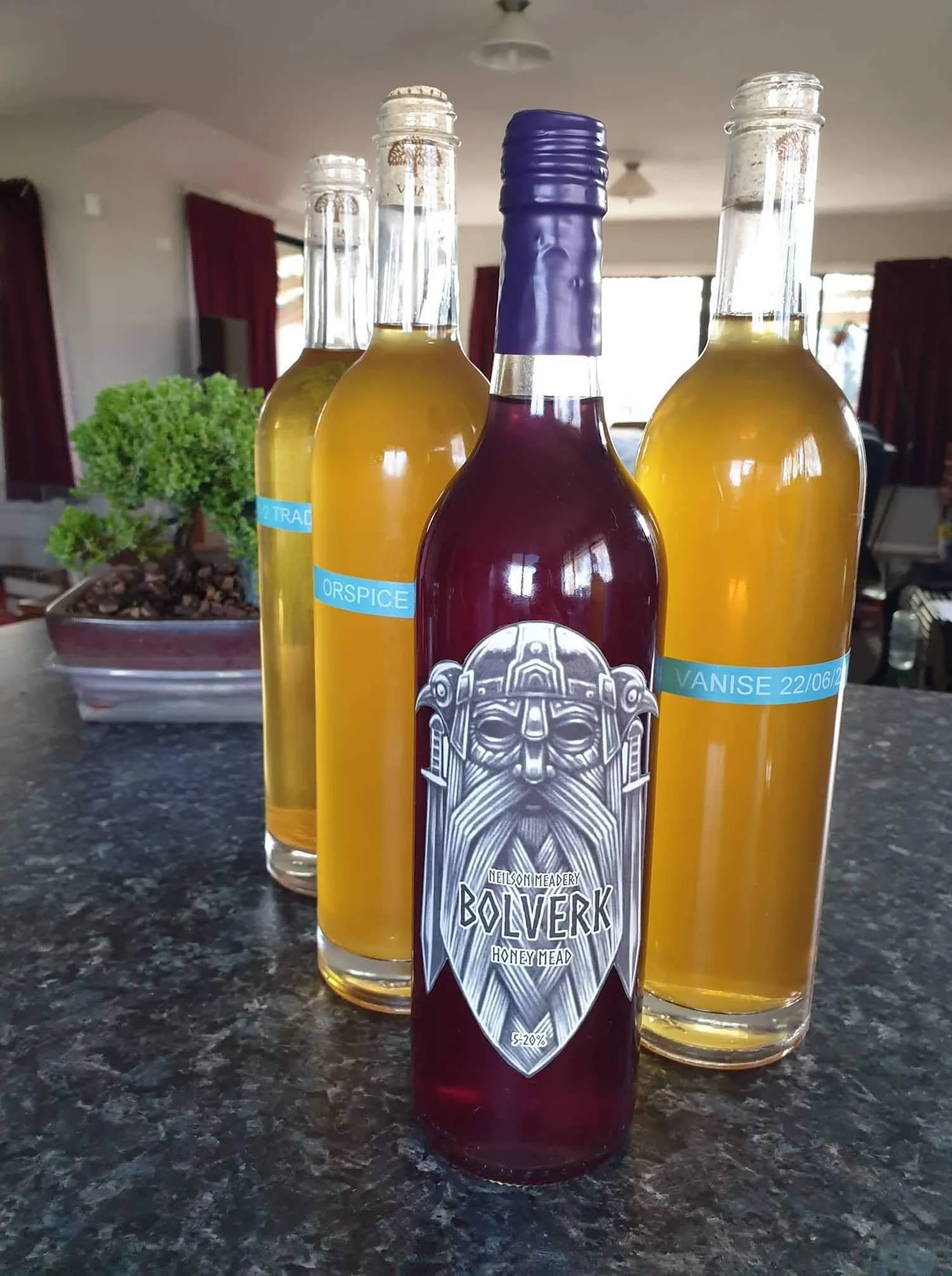
So many different flavors to try…
My evenings became a mixture of reading forums, watching videos, taking notes, and scribbling ideas into notebooks. Traditional meads, melomels, hydromels, sack meads, bochets. Every style seemed to open up a whole new world of possibilities.
The collection of equipment started growing as well.
One fermenter became two.
Two became four.
Then somehow a 60-litre fermenter appeared.
I say "somehow" because I'm fairly certain every brewer reaches a point where they stop making rational equipment purchases and start convincing themselves that larger fermenters are actually saving money.
The house began to feel the effects.
Warm cupboards were quietly claimed.
Laundry space disappeared.
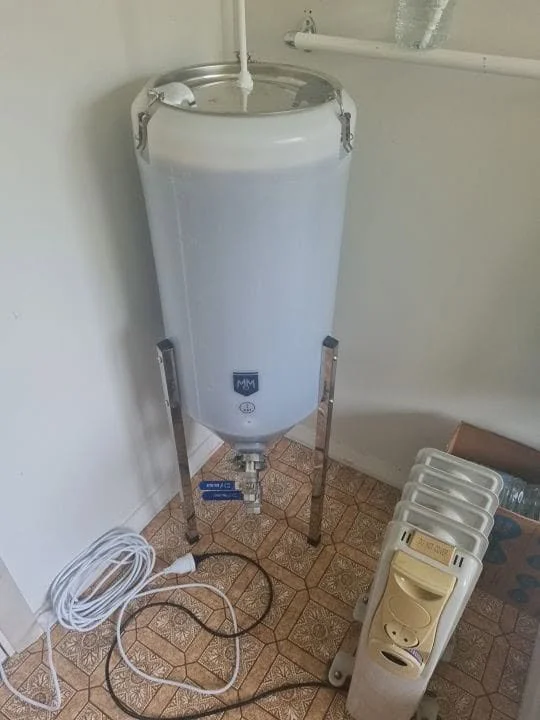
A claimed corner, after the 60L “just appeared”…
Bottles started appearing in places bottles had no business appearing.
Through it all, Kylie remained incredibly supportive, although I'm fairly sure there were moments she questioned exactly how many fermenters one person could possibly need.
The funny thing is that I wasn't thinking about starting a business.
Not even close.
I was simply fascinated.
Every batch felt like a puzzle waiting to be solved. Every mistake revealed something new. Every successful bottle shared with friends and family brought the same question:
"You made this?"
That question never got old.
What started as curiosity had quietly become a genuine passion.
I didn't realise it at the time, but the foundations of the meadery were already being built. Not through business plans or spreadsheets, but through countless small batches, mistakes, experiments, and lessons learned one fermenter at a time.
The dream of starting a meadery was still a long way off.
But the seed had been planted.
And it was growing.
In Part 2, I'll talk about the moment the idea stopped being "a hobby" and became a serious question:
Could I actually turn this into a business?
