
Amazing Things About Mead: Why This Ancient Drink Is Making a Bold Comeback
Forget everything you thought you knew about alcohol. While the world obsesses over the latest craft beer or trendy seltzer, there's an ancient elixir quietly reclaiming its throne—and it's been waiting 9,000 years for you to catch on.
Mead isn't just a drink. It's a liquid time capsule, a testament to human ingenuity, and quite possibly the most underrated beverage on the planet. Whether you're a seasoned sipper or completely new to the honey wine game, prepare to have your mind blown by the amazing things about mead that make it utterly extraordinary.
This isn't your dusty museum exhibit. Modern craft meaderies are revolutionizing this ancient drink with bold flavors, premium ingredients, and techniques that honor tradition while embracing innovation.
The World's Oldest Alcoholic Beverage Has Serious Credentials
Here's a fact that'll make your favorite craft beer feel like a newborn: mead predates both wine and beer by thousands of years. Archaeological evidence from pottery vessels in Northern China dates mead production back to approximately 7000 BCE—that's over 9,000 years of humans enjoying fermented honey.
Think about that for a moment. Before the pyramids were built, before Stonehenge was erected, our ancestors were already perfecting the art of mead making. This wasn't just a drink; it was woven into the fabric of civilization itself.
The ancient Greeks called it ambrosia—the nectar of the gods. Norse Vikings believed mead granted wisdom and poetic inspiration. In medieval Europe, it was the drink of royalty and warriors alike. When you raise a glass of mead, you're participating in a tradition that spans virtually every culture on Earth.
Mead Is Naturally Gluten-Free (And Your Gut Will Thank You)
If you've been searching for a gluten-free alcohol option that doesn't taste like compromise, mead is your answer. Because it's made from honey, water, and yeast—with no grains involved whatsoever—mead is inherently gluten-free.
This isn't some processed, stripped-down alternative. It's naturally occurring. For the estimated 1 in 70 Australians living with coeliac disease, and the many more who experience gluten sensitivity, quality craft mead opens up a world of flavor without the digestive drama.
But here's where it gets even better. Premium meaderies like Neilson Meadery take this a step further by using 100% pure local native honey and natural fruit ingredients—no artificial additives, no hidden nasties, just clean ingredients you can actually pronounce.
The Sugar Story: Why Craft Mead Beats Ciders and RTDs
Let's talk about what's really in your glass. Most commercial ciders and ready-to-drink beverages are loaded with added sugars, artificial sweeteners, and enough preservatives to outlast a nuclear winter.
Craft mead tells a different story entirely.
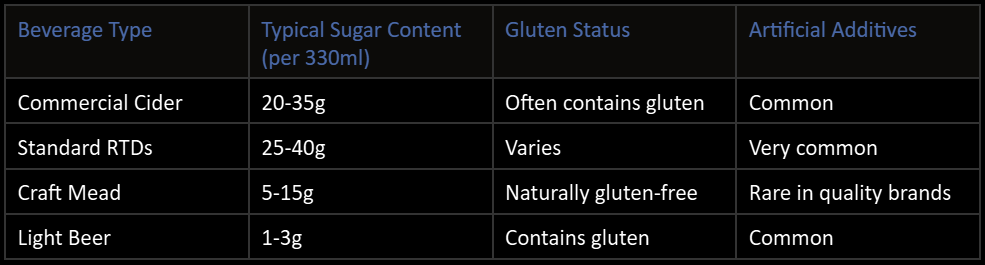
Craft mead is considerably better for you.
During the fermentation process, yeast converts the natural sugars in honey into alcohol. The result? A lower sugar alternative that delivers complex flavors without the sugar bomb. Quality craft mead achieves sweetness through residual honey notes rather than dumping in refined sugars after the fact.
Traditional Brewing Meets Modern Innovation
The magic of contemporary mead lies in this beautiful tension between ancient wisdom and modern creativity. Traditional mead brewing techniques—slow fermentation, careful temperature control, patient ageing—form the foundation. But today's craft meaderies aren't content to simply replicate the past.
They're pushing boundaries.
Consider the explosion of mead styles now available:
Melomel: Mead fermented with fruits like berries, stone fruits, or citrus
Metheglin: Spiced mead featuring botanicals, herbs, and spices
Cyser: A hybrid of mead and apple cider
Bochet: Made with caramelized honey for rich, toffee-like notes
Session Mead: Lower alcohol versions perfect for casual drinking
This diversity means there's a mead for every palate. Whether you prefer something dry and crisp or sweet and indulgent, the craft mead movement has you covered.
New Zealand's Secret Weapon: Native Honey
Not all honey is created equal, and this is where geography becomes destiny. New Zealand's native honey varieties—including the world-renowned Mānuka—possess flavor profiles and properties you simply cannot replicate elsewhere.
The unique flora of New Zealand, from native bush to coastal Pohutukawa, creates honey with distinctive characteristics. When a meadery commits to using 100% pure local native honey, they're not just making a marketing claim. They're capturing terroir—that sense of place that elevates a good drink to an exceptional one.
Expert insight: According to master meadmakers, the quality of honey accounts for approximately 70% of a mead's final flavor profile. Using premium, single-origin honey versus generic blended honey is the difference between a forgettable drink and something truly memorable.
This is why discerning drinkers are increasingly seeking out meaderies with transparent sourcing. When you know exactly where your honey comes from, you can taste the difference.
Health Benefits That Might Surprise You
Let's be clear: mead is alcohol, and moderation matters. But within the context of responsible drinking, mead offers some genuinely interesting potential benefits that other alcoholic beverages can't match.
Raw honey—the foundation of quality mead—contains:
Antioxidants including flavonoids and phenolic acids
Trace enzymes that support digestive health
Natural prebiotics that may benefit gut bacteria
Vitamins and minerals including B vitamins, iron, and zinc
While fermentation alters some of these properties, research published in the Journal of the Science of Food and Agriculture suggests that mead retains meaningful antioxidant activity. Some traditional mead varieties, particularly those made with herbs and botanicals, were historically consumed for their perceived medicinal properties.
Again, we're not claiming mead is a health food. But compared to beverages made from refined grains and loaded with artificial ingredients, honey-based mead represents a more natural choice.
The Craft Mead Revolution Is Here
The numbers don't lie. The global mead market has experienced double-digit growth annually over the past decade, with craft meaderies leading the charge. What was once a niche curiosity has become a legitimate movement.
Why now? Several factors are converging:
Health consciousness: Consumers increasingly scrutinise ingredients and seek cleaner alternatives
Flavour fatigue: After decades of beer and wine dominance, drinkers crave something different
Craft culture: The same ethos driving craft beer and spirits has embraced mead
Dietary requirements: Growing awareness of gluten sensitivity has expanded the market
Storytelling: Mead's rich history resonates with consumers seeking authenticity
Craft meaderies aren't competing with industrial beverage giants on volume. They're competing on quality, story, and experience. And they're winning.
How to Drink Mead Like You Mean It
Mead is remarkably versatile, but a few guidelines will help you get the most from your experience.
Temperature matters. Lighter, drier meads shine when served chilled (8-12°C). Richer, sweeter varieties can be enjoyed slightly warmer (12-16°C) to let their complexity unfold. Some spiced meads are even brilliant served warm during winter months.
Glassware counts. While you don't need anything fancy, a wine glass or tulip-shaped glass concentrates aromas and enhances the tasting experience. Avoid drinking quality mead from the bottle—you're missing half the pleasure.
Food pairings open up endless possibilities:
Dry meads pair beautifully with seafood and light poultry
Fruit meads complement cheese boards and charcuterie
Spiced meads stand up to rich, bold dishes like curries and roasted meats
Sweet meads make exceptional dessert companions
Sustainability and the Future of Mead
Here's something the environmentally conscious drinker should know: quality mead production can be remarkably sustainable. Bees are essential pollinators, and supporting ethical honey production supports broader ecosystem health.
Meaderies that source from local beekeepers create economic incentives for sustainable apiculture. When you choose a craft mead made with locally sourced native honey, you're casting a vote for biodiversity and environmental stewardship.
The Food and Agriculture Organization has highlighted the critical role of pollinators in global food security. Every purchase of quality, ethically sourced mead contributes however modestly to this larger picture.
Why Neilson Meadery Represents the Best of Modern Mead
Not all meaderies are created equal. The difference between mass-produced mead and genuine craft lies in the details: ingredient sourcing, fermentation techniques, quality control, and an unwavering commitment to excellence.
Neilson Meadery exemplifies this approach. By using 100% pure New Zealand native honey and natural fruit ingredients, they've created a range that honors mead's ancient heritage while delivering distinctly modern flavor profiles. Every batch is handcrafted, not industrially produced.
The result is a premium craft mead that stands apart—lower in sugar than commercial alternatives, naturally gluten-free, and bursting with the authentic taste of New Zealand's unique terroir.
Your Mead Journey Starts Now
Mead isn't just making a comeback. It's being rediscovered by a new generation of drinkers who demand more from their beverages—more flavour, more authenticity, more story, and cleaner ingredients.
The amazing things about mead aren't ancient history. They're happening right now, in craft meaderies that are pushing boundaries while respecting tradition. Whether you're drawn by the gluten-free benefits, the lower sugar content, the rich history, or simply the desire to try something genuinely different, mead rewards the curious.
Ready to taste what 9,000 years of refinement produces? Explore the Neilson Meadery range and discover why this ancient drink is the boldest choice you'll make this year.
